Introduction
If you have ever rolled with someone who caught you in a triangle choke, you know that helpless feeling when your own arm and their leg trap your neck at the same time. It looks simple from the outside, but it takes real technique to pull off cleanly. The triangle choke is one of the most iconic submissions in grappling, and once you understand the mechanics, you will start hitting it with real confidence.
This guide walks you through everything you need to know. You will learn what the triangle choke actually is, how it chokes someone using your legs instead of your hands, and how to set it up from guard, mount, and even mid air. We will also cover common mistakes, escape methods, variations, and how it compares to the arm triangle. By the end, you will have a complete roadmap to sharpen your triangle choke game.
What Is a Triangle Choke?
Definition
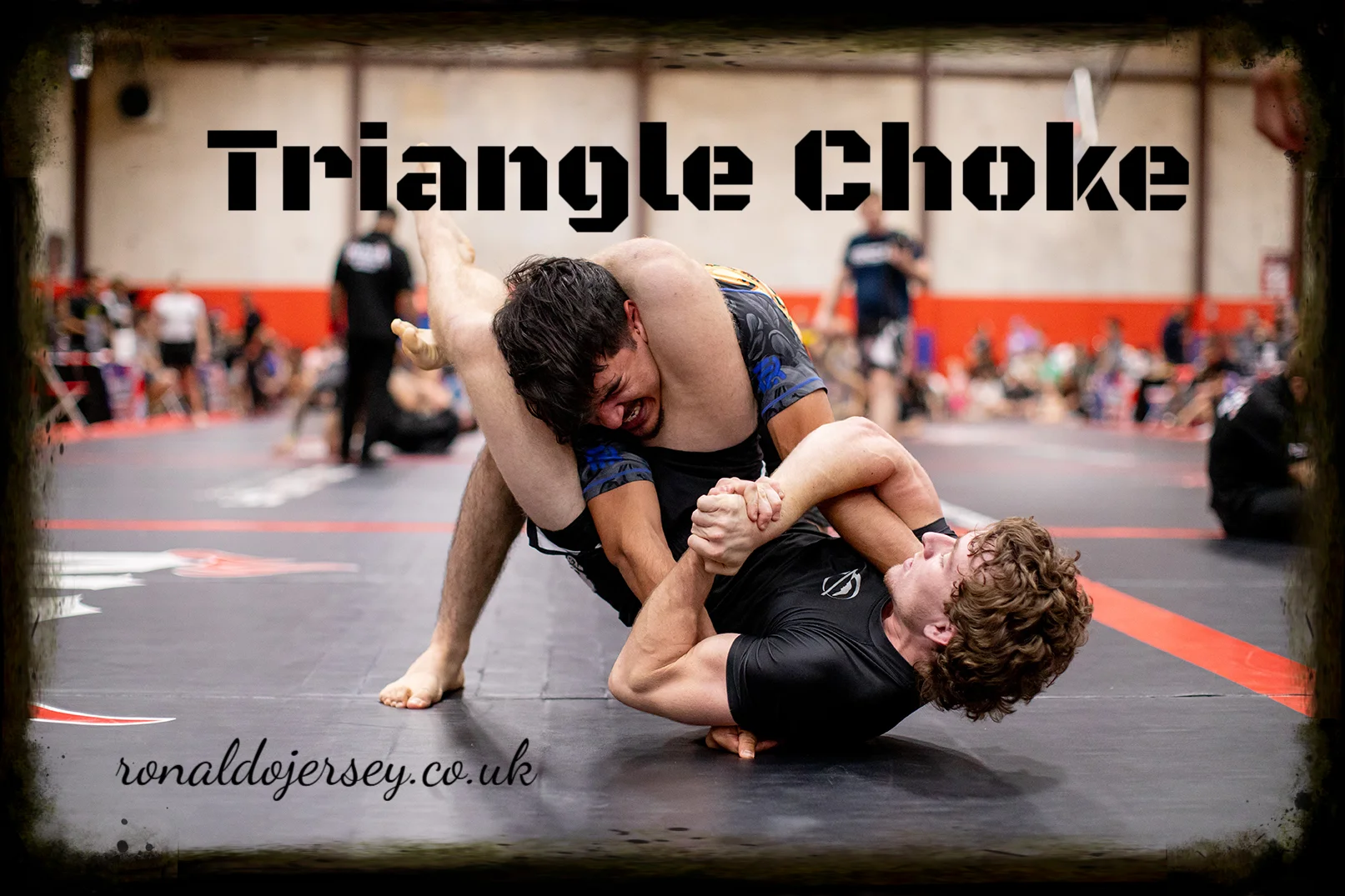
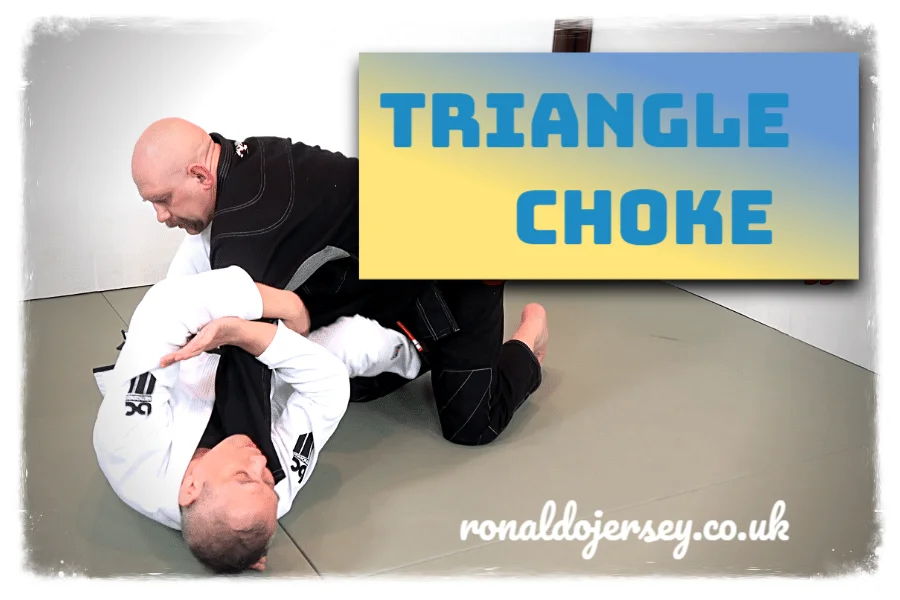
A triangle choke is a submission where you use your legs to trap your opponent’s head and one arm, forming a triangle shape that squeezes their neck. Instead of using your hands like a rear naked choke, you rely entirely on leg strength and hip movement.
Why It Is Called a Triangle Choke
The name comes from the shape your legs form once you lock them together. One leg goes behind your opponent’s neck, the other leg locks behind your own knee, and together they create a clear triangle around the opponent’s head and arm.
How It Works
Your legs act like a vice. One thigh presses against one side of the neck, while your own shin and calf press against the other side. The trapped arm actually helps close the gap, which is why controlling that arm matters so much.
Blood Choke Versus Air Choke
The triangle choke is a blood choke, not an air choke. It compresses the carotid arteries instead of the windpipe, which means it can end a fight quickly and with far less discomfort than a straight air choke. This is also why it is considered safer to tap early rather than fight through it.
Martial Arts That Use It
You will see the triangle choke in Brazilian Jiu Jitsu, judo newaza, submission wrestling, and mixed martial arts. It has become a signature BJJ submission because of how effectively it works from guard positions.
How Does a Triangle Choke Work?
Understanding the mechanics helps you finish the choke faster and with less energy. Here is what happens step by step once the choke is locked in.
- Leg positioning: Your legs wrap around the opponent’s neck and one arm, forming the triangle shape.
- Neck compression: Your thigh and calf close in from opposite sides of the neck.
- Shoulder trapped inside: The opponent’s own shoulder pushes into their neck, adding extra pressure.
- Carotid artery compression: Blood flow to the brain slows down on both sides of the neck.
- Cutting off blood flow: With both arteries compressed, oxygen to the brain drops fast.
- Opponent taps or loses consciousness: Most opponents tap within seconds once the choke is tight. SOURCE : DeviantArt
Step by Step Guide to Perform a Triangle Choke
Here is a simple breakdown you can practice on the mats. Go slowly at first so your training partner can give you feedback.
- Control the opponent’s arm. Grab a wrist or sleeve so they cannot post or defend easily.
- Shoot your legs up. Use your hips to bring your legs toward their shoulder and neck.
- Lock one leg over the neck. Place one leg behind their neck while the other stays on their back.
- Form the figure four leg position. Lock your ankle behind your own knee to seal the triangle.
- Pull the head down. Use your hands to pull their head toward your hips, tightening the angle.
- Angle your hips. Shift your hips to the side of the trapped arm for maximum pressure.
- Finish the choke. Squeeze your knees together and pull down until they tap.
I always tell newer students that the hip angle matters more than raw leg strength. A tight angle finishes chokes that a strong squeeze alone never will.
Triangle Choke From Different Positions
You can hit a triangle choke from almost anywhere on the ground once you understand the setup. Here are the most common entries you will use in training and competition.
Closed Guard Triangle
This is the classic setup. You control a wrist, break their posture, and swing your legs up while they are bent forward.
Open Guard Triangle
Here you use your feet on the hips or biceps to create space before shooting your legs up for the same lock.
Mount Triangle
From mount, you isolate one arm and swing your leg over their head, turning the mount into a tight triangle finish.
Side Control Triangle
This is trickier, but you can trap an arm and neck together before swinging a leg over for the lock.
Spider Guard Triangle
Using foot and sleeve control on the arms, you pull an opponent forward and lock the triangle before they can recover posture.
Rubber Guard Triangle
Popularized in no gi grappling, this setup uses extreme flexibility to control the head and shoulder before locking the legs.
Flying Triangle Choke
This is a jumping entry where you leap from standing straight into a triangle, often used to surprise an opponent.
Rear Triangle Choke
Applied from the back, this variation traps the neck and arm while you control the opponent from behind rather than the front. Sophie Cunningham Sports Illustrated
Triangle Choke in Brazilian Jiu Jitsu
Importance in BJJ
The triangle choke is considered a core submission in BJJ curriculums. Most schools teach it early because it reinforces hip movement, angle control, and guard retention all at once.
Competition Use
You will see triangle chokes finish matches at every level, from local tournaments to major BJJ events. It rewards good timing over pure strength, which makes it popular with lighter competitors too.
Gi Versus No Gi Differences
In the gi, you get extra grips on collars and sleeves that make controlling the arm easier. In no gi, you rely more on wrist control and speed since there is no fabric to grab.
Belt Levels
White belts usually learn the basic version from closed guard. As you move up in belt level, you add variations like the mount triangle, spider guard entries, and quicker transitions between attacks
Triangle Choke in MMA
UFC Usage
The triangle choke has produced some unforgettable finishes inside the octagon. Fighters with strong BJJ backgrounds often look for it once a fight goes to the ground.
Cage Adaptations
In MMA, fighters must also account for strikes while setting up the choke, which changes timing compared to pure grappling matches.
Ground Fighting Applications
A triangle choke can also work as a defensive tool, since it controls a striking opponent’s posture and prevents effective ground and pound.
Famous UFC Finishes
Several lightweight and welterweight champions have secured title wins using a triangle choke, showing that it works even at the highest level of competition.
Common Triangle Choke Mistakes
Even experienced grapplers miss triangle chokes because of small technical errors. Watch out for these common issues.
- Wrong leg angle: A flat angle lets your opponent posture out easily.
- Loose figure four: A weak lock reduces the pressure on the neck.
- Not controlling the arm: Without arm control, opponents can pull free before you finish.
- Poor hip angle: Squaring your hips instead of angling them wastes leverage.
- Crossing feet incorrectly: This weakens the lock and gives your opponent room to escape.
- Leaving too much space: Extra space between your legs and their neck delays or ruins the choke.
How to Escape a Triangle Choke
If you ever get caught, do not panic. A calm defense is often the difference between tapping and escaping.
- Posture up. Stand tall to reduce pressure on your neck early.
- Stack pass. Drive forward to stack your opponent and remove their leverage.
- Apply shoulder pressure. Push your shoulder into their leg to loosen the triangle.
- Fix your hand positioning. Keep your trapped hand tucked to avoid worsening the choke.
- Use a knee escape. Rotate your knee through to create space and pass around the legs.
- Practice early defense. Stop the choke before it locks by keeping good posture from the start.
- Try a last second escape. If the choke tightens, focus on stacking hard and popping your head free quickly.
Triangle Choke Variations
Once you are comfortable with the basic version, these variations expand your submission game significantly.
- Reverse triangle choke: Applied with your body facing the opposite direction from the standard setup.
- Flying triangle: A jumping version applied from standing position.
- Mounted triangle: Finished directly from full mount position.
- Arm triangle: A different submission that uses your arm and shoulder instead of your legs. It is not the same technique as a leg triangle, even though the name sounds similar.
- Inverted triangle: Applied while upside down or during scrambles.
- Side triangle: Set up from a side control style position.
- Rear triangle: Locked in from behind the opponent’s back.
Charlotte Hornets vs Miami Heat Match Player Stats
Triangle Choke vs Arm Triangle
People often mix these two up because of the similar name, but they work in completely different ways.
| Feature | Triangle Choke | Arm Triangle |
|---|---|---|
| Body part used | Legs | Arms and shoulder |
| Common position | Guard or mount | Side control or north south |
| Blood choke mechanics | Thigh and calf compress the neck | Shoulder and arm compress the neck |
| Difficulty | Requires flexibility and hip control | Requires strong pressure and positioning |
| Best situation | Opponent postures forward in your guard | Opponent turns away in side control |
Final Thoughts
The triangle choke rewards patience, timing, and correct angles far more than brute strength. Once you understand how the legs form that vice around the neck and arm, the whole technique starts to click. Practice each step slowly, drill the escapes just as often as the attacks, and you will start catching training partners who never see it coming.
Which position do you usually hit your triangle choke from? Try adding one new variation from this guide into your next training session and see how it feels. If this guide helped you understand the triangle choke better, share it with a training partner who could use the refresher too.
Frequently Asked Questions
Is the triangle choke a blood choke or an air choke?
It is a blood choke. It compresses the carotid arteries on both sides of the neck rather than the windpipe.
How long does it take to learn a triangle choke?
Most white belts pick up the basic mechanics within a few months, though refining the angle and speed takes ongoing practice.
Why can I not finish my triangle choke even when it feels tight?
This usually happens because of a flat hip angle or a loose figure four lock. Angling your hips toward the trapped arm often solves this.
Is a triangle choke dangerous?
Like any blood choke, it can cause unconsciousness if held too long. Tapping early is always the safer choice during training.
Can smaller grapplers finish a triangle choke on bigger opponents?
Yes. Since the technique relies on angle and leverage rather than pure strength, it is popular with lighter competitors.
What is the difference between a triangle choke and an arm triangle?
A triangle choke uses your legs to trap the neck and arm, while an arm triangle uses your own arm and shoulder to apply pressure.
What is the best way to defend against a triangle choke?
Posturing up early and keeping your elbow tight to your body prevents the choke from ever locking in properly.
Which BJJ position sets up the triangle choke most often?
Closed guard is the most common starting point, especially when your opponent leans forward and loses their posture.
ronaldojersey
About the Author
Written by a BJJ practitioner and grappling content writer who has spent years training on the mats and breaking down techniques for readers new to the sport. Focused on making complex submissions like the triangle choke easy to understand and apply in real training sessions.