
Introduction
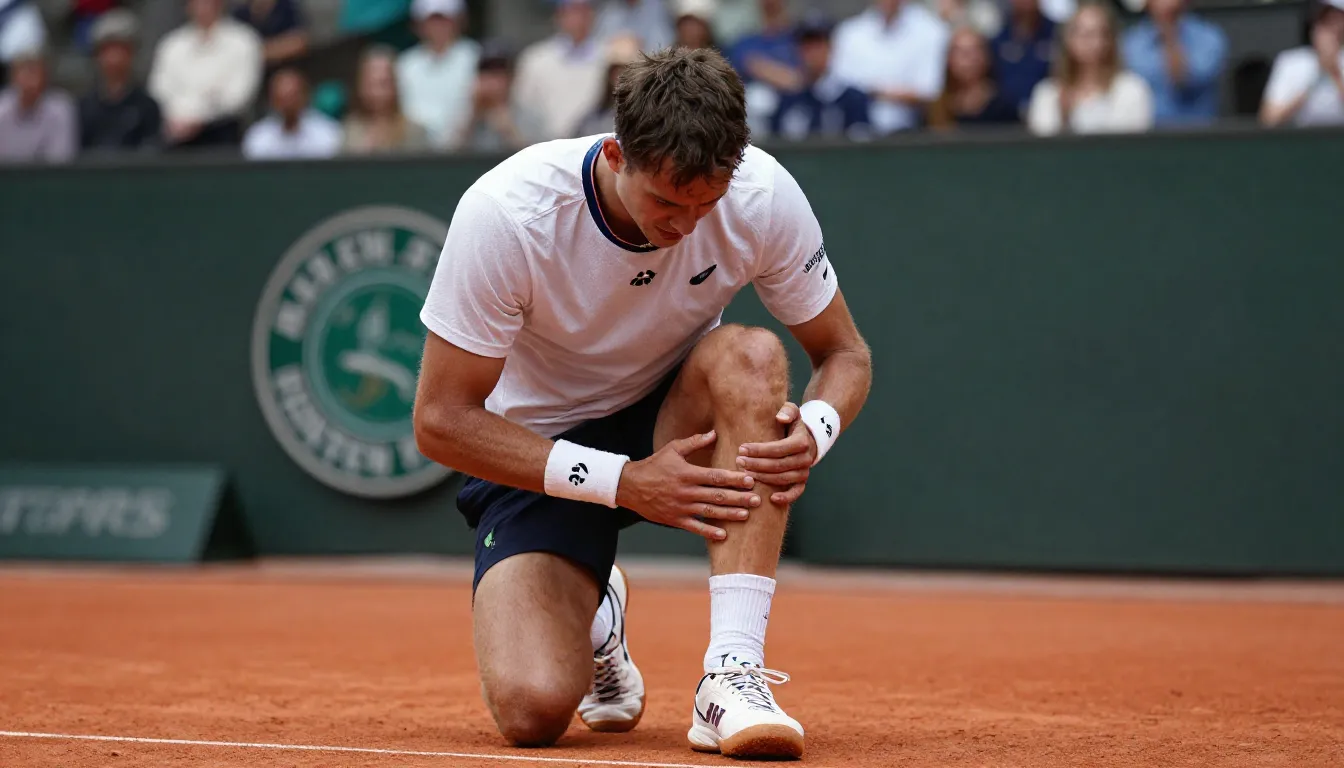
If you follow professional tennis, the Ben Shelton injury at the 2025 US Open hit like a gut punch. One moment, Ben Shelton was flying high — seeded No. 6, fresh off his first ATP Masters 1000 title in Toronto, and looking like a genuine Grand Slam contender. The next moment, he was on the bench in tears, a towel over his head, walking off Arthur Ashe Stadium for the very first time in his professional career.
The Ben Shelton injury shocked fans, analysts, and fellow players alike. In 178 professional matches, Shelton had never once retired mid-match. He had always found a way to push through pain. But this time, something was different.
This article gives you the full picture. You will learn exactly what the Ben Shelton injury was, what likely caused it, what the symptoms looked like, how it was treated, and what experts say about preventing similar shoulder injuries in tennis players. Whether you are a tennis fan, a sports medicine enthusiast, or someone dealing with a shoulder issue yourself, this one is for you.
What Is the Ben Shelton Injury?
The Ben Shelton injury is a left shoulder injury he sustained during his third-round US Open match against Adrian Mannarino on August 29, 2025. Shelton is left-handed, which makes his left shoulder especially important — it drives his famously powerful serve, regularly clocked above 130 mph.
The exact diagnosis was not publicly confirmed right away. However, sports medicine experts and tennis commentators speculated it could have been one of several shoulder conditions common in overhead athletes.
Possible Shoulder Conditions Involved
When experts discussed the Ben Shelton injury, they identified several possibilities:
Shoulder impingement syndrome — This is when tendons in the rotator cuff get pinched between shoulder bones during overhead movements. It is extremely common in tennis players and causes sharp pain during serves and forehands.
Rotator cuff tear — The rotator cuff is a group of four muscles and their tendons. A partial or full tear causes significant weakness and stabbing pain. Commentator Chanda Rubin noted this was a real possibility when discussing the Ben Shelton injury live on Tennis Channel.
Labral tear — The labrum is the cartilage ring around the shoulder socket. Tears can happen suddenly from a fall or awkward movement and cause deep, aching pain with instability.
Shoulder strain or muscle pull — A less severe option, but still one that forces players off the court if the pain is high enough.
Shelton himself said he could not pinpoint what caused the Ben Shelton injury or even exactly when it started. He only noticed it early in the fourth set.
Causes of the Ben Shelton Injury
Understanding the causes behind the Ben Shelton injury matters for any athlete who plays overhead sports. Several factors likely combined to create this situation.
Acute Trauma During Play
Right before the Ben Shelton injury became apparent, Shelton had dived and landed awkwardly on his left arm while chasing a ball to win the third set. He threw his arm up to celebrate immediately after. But that fall may have been the triggering moment for the shoulder problem that followed.
Landing on an outstretched arm places massive rotational stress on the shoulder joint. It can strain tendons, pinch tissue, or partially tear structures that were already under stress.
Overuse and Cumulative Stress
Tennis players at the elite level hit thousands of overhead shots every week. The Ben Shelton injury did not necessarily begin on that single play. Cumulative wear builds up over months of training and competition.
By the time of his US Open match, Shelton had already played a heavy schedule in 2025. He had:
- Reached the Australian Open semifinals
- Made the Munich final
- Won the Toronto Masters 1000
- Competed through multiple tour events
That is an enormous physical workload. Repetitive overhead motions gradually stress the rotator cuff, shoulder bursa, and surrounding tissues. The Ben Shelton injury may well have been a long time coming.
Serve Mechanics and High Velocity
Shelton’s serve is one of the most powerful in tennis. His left-handed delivery regularly tops 140 mph. High-velocity serving places extraordinary stress on the shoulder at the point of internal rotation. Over time, even minor mechanical flaws or fatigue patterns can lead to injury.
When you combine a physically demanding schedule with one sudden awkward fall, you get exactly the kind of scenario the Ben Shelton injury represents.
Symptoms: What Did the Ben Shelton Injury Look Like?
You could see the signs of the Ben Shelton injury clearly on television during the match. Knowing these symptoms helps you recognize similar issues in yourself or others.
Sharp, sudden pain during play — Shelton winced visibly on his forehand side early in the fourth set. He shouted to his coach’s box: “I did something to my shoulder. I don’t know what it is.”
Restricted range of motion — During the Ben Shelton injury, he was unable to fully swing through on his forehand. He resorted to slicing the ball instead, which is a sure sign the normal movement was too painful.
Pain during overhead motion — His serve still produced some strong balls, but he grabbed his shoulder after delivering them. Jim Courier noted this during commentary on the Ben Shelton injury, saying the serve appeared less impacted than the forehand.
Emotional distress and tears — The Ben Shelton injury forced him off the court in tears. He covered his head with a towel as he walked off. That level of reaction from someone who says he always pushes through tells you the pain was genuinely severe.
Described pain level as “really high” — When asked afterward, Shelton said the pain was at a very high level. He also said he had never felt anything like it before in his career.
Common symptoms of the type of shoulder injury Shelton likely experienced include:
- Sudden or sharp pain in the outer shoulder
- Weakness when raising the arm
- Popping or clicking sensations
- Difficulty reaching behind your back
- Pain that worsens with overhead activity
- Tenderness along the shoulder joint
If you experience any combination of these after playing sport, you should stop activity and seek medical attention.
Diagnosis of Shoulder Injuries Like the Ben Shelton Injury
When evaluating the Ben Shelton injury, the medical team in New York would have followed a systematic process. Here is how shoulder injuries like this one get diagnosed in elite athletes.
Initial Courtside Assessment
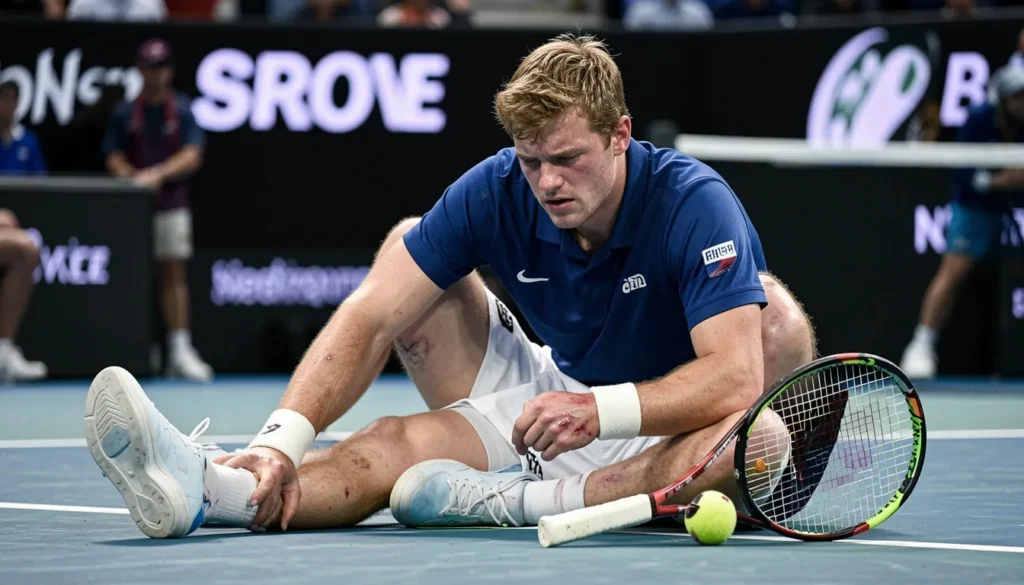
The physiotherapist visited Shelton multiple times during the match. This is a standard first response. The on-court physio performs a brief assessment of range of motion, pain location, and neurological signs. In the case of the Ben Shelton injury, the trainer applied cream and attempted to help Shelton continue, but the pain was too significant.
Imaging Tests
After the match, scans would have been scheduled in New York. Former world No. 1 Jim Courier mentioned this specifically in his commentary on the Ben Shelton injury, saying the team would “be getting scans in New York City today or sometime soon to figure out what they need to do.”
Standard imaging for this type of injury includes:
MRI (Magnetic Resonance Imaging) — The gold standard for visualizing soft tissue damage. An MRI can show rotator cuff tears, labral damage, and inflammation with high accuracy.
Ultrasound — Used to assess tendons and detect fluid buildup or partial tears in real time.
X-ray — Primarily rules out bone fractures or bony abnormalities in the shoulder joint.
Clinical testing — Physical tests like the Neer test, Hawkins-Kennedy test, and empty can test help identify specific structures involved.
Given that the Ben Shelton injury involved his serving arm and his livelihood, a thorough and immediate diagnostic workup was absolutely necessary.
Treatment: How Was the Ben Shelton Injury Managed?
The good news is that the Ben Shelton injury did not end his season permanently. By early October 2025, Shelton had returned to competition at the Shanghai Masters. He told ATP Media: “It is getting there. As any injury, it takes time to recover. I wouldn’t show up to a tournament unless I thought I was ready. That is why I skipped a few, but I should be ready to go now.”
Here is the treatment approach that typically follows a shoulder injury like the one Shelton sustained.
Phase 1: Rest and Inflammation Control
The first priority after the Ben Shelton injury would have been to reduce swelling and allow inflamed tissue to calm down. This typically involves:
- Complete rest from overhead activity
- Ice application to control acute inflammation
- Anti-inflammatory medications as prescribed
- Avoiding any movement that aggravates the shoulder
Shelton skipped Laver Cup, Davis Cup, and the Japan Open — roughly five weeks of competition — before returning in Shanghai. That rest period is consistent with managing a moderate to significant shoulder soft tissue injury.
Phase 2: Physical Therapy and Rehabilitation
Once inflammation settles, structured rehabilitation begins. For injuries similar to the Ben Shelton injury, physiotherapy typically involves:
Rotator cuff strengthening — Targeted exercises rebuild the small stabilizing muscles of the shoulder.
Scapular stabilization work — Strengthening the muscles around the shoulder blade improves joint mechanics and reduces risk of re-injury.
Range of motion restoration — Gentle stretching and mobility drills gradually restore full movement.
Sport-specific loading — Eventually, the athlete reintroduces tennis-specific movements, starting with light hitting and building toward full serving.
Phase 3: Return to Play
Shelton’s return to Shanghai showed that his recovery was on track. He was cautious and methodical. He said clearly that he would not have shown up if he did not feel ready. This conservative approach is exactly what sports medicine professionals recommend after a significant shoulder injury.
Prevention Tips for Tennis Shoulder Injuries
The Ben Shelton injury is a reminder that even elite athletes are vulnerable. You do not have to be a professional to protect your shoulder from this kind of damage. Here are evidence-based prevention tips.
Warm up properly before every session. Cold muscles and stiff joints are injury-prone. Spend at least 10 minutes on dynamic warm-up before picking up a racket.
Strengthen your rotator cuff year-round. The four muscles of the rotator cuff act as stabilizers. Exercises like internal and external rotation with resistance bands, side-lying raises, and face pulls build protection against the forces involved in serving.
Work on scapular stability. Weak shoulder blade muscles throw off your entire shoulder mechanics. Rows, Y-T-W exercises, and push-up plus movements are all excellent choices.
Check your serve mechanics. Poor technique amplifies shoulder stress dramatically. A qualified coach can identify movement patterns that increase injury risk.
Manage your training load. The Ben Shelton injury happened at the end of a very full competitive year. Monitoring total hitting volume, including sets, matches, and practice sessions, helps prevent the cumulative damage that makes acute injuries more likely.
Listen to early warning signs. Tightness, clicking, or mild discomfort during overhead activity are your body’s early warnings. Do not ignore them the way many athletes do.
Incorporate regular recovery work. Massage, foam rolling, contrast baths, and adequate sleep all contribute to tissue health and resilience.
Cross-train intelligently. Swimming, yoga, and resistance training all build supporting structures around the shoulder when done correctly.
Expert Advice on the Ben Shelton Injury
Several respected voices weighed in on the Ben Shelton injury when it happened.
Chanda Rubin, a former Grand Slam semifinalist and Tennis Channel analyst, said: “It’s tough to watch, and you just hope it’s not as serious as it looked in the moment. There are a lot of things that could go wrong with the shoulder.”
Jim Courier, a former world No. 1, pointed out a positive sign during the Ben Shelton injury. He noted that Shelton’s serve and overhead motions appeared less impacted than his forehand. “That’s the most important shot for him overall, so that doesn’t seem to be troubled by whatever this is,” Courier said. That gave experts hope the Ben Shelton injury might not require surgery.
Lindsay Davenport, the 1998 US Open champion, captured the emotional weight of the Ben Shelton injury perfectly: “You could just see how crushed he was. He has hopes of winning this tournament. He’s been close. He built so much momentum this summer to try and make a run here.”
Sports medicine professionals who work with overhead athletes consistently emphasize three key points about injuries like the Ben Shelton injury:
- Early diagnosis always leads to better outcomes than playing through pain.
- Structured rehabilitation is non-negotiable before returning to full competition.
- Load management across an entire season is the most underrated form of injury prevention.
Shelton himself modeled these principles well in his recovery, returning only when he felt ready rather than rushing back for ranking points.
Ben Shelton’s Recovery and What It Means Going Forward
The Ben Shelton injury ultimately cost him about five weeks of competition. He skipped Laver Cup, Davis Cup, and Tokyo before returning at the Shanghai Masters. At the time of his Shanghai return, he held a 37-18 tour-level record for 2025 and sat sixth in the Race to Turin for the Nitto ATP Finals.
He was honest and focused in Shanghai. He said: “I’m not done. I have more things that I want to accomplish this year, so let’s see where we are in a month’s time.”
That attitude matters. The Ben Shelton injury was a serious setback. But how an athlete responds to injury reveals character. Shelton showed patience, professionalism, and a clear-eyed understanding of what his body needed.
For tennis fans, the Ben Shelton injury is a cautionary tale about overloading elite athletes and the physical demands of professional tennis. For players at every level, it is a lesson in prevention, early detection, and smart recovery.
Conclusion
The Ben Shelton injury was one of the most talked-about sporting moments of the 2025 US Open. It forced a 22-year-old powerhouse off the court for the first time in 178 professional matches, brought tears to his eyes, and sent shockwaves through the tennis world.
You now understand what the Ben Shelton injury likely involved, what caused it, how it presented on court, how it was diagnosed and treated, and what you can do to protect your own shoulder from similar damage.
The biggest takeaway? No athlete is invincible. The human shoulder is a remarkable structure, but it has limits. Respecting those limits — through proper training, load management, smart mechanics, and early injury response — is what separates long careers from short ones.
Are you dealing with shoulder pain yourself? Or do you know a tennis player who could use this information? Share this article and help spread awareness about smart injury prevention. Your shoulder will thank you.
FAQs About the Ben Shelton Injury
Q1: What exactly was the Ben Shelton injury? The Ben Shelton injury was a left shoulder injury sustained during his third-round match at the 2025 US Open against Adrian Mannarino. The exact diagnosis was not officially confirmed, but experts suggested it could have been a shoulder impingement, rotator cuff strain, or labral issue.
Q2: When did the Ben Shelton injury happen? The Ben Shelton injury occurred on August 29, 2025, during the third round of the 2025 US Open in New York.
Q3: Did Ben Shelton ever retire from a match before this? No. The Ben Shelton injury forced the first retirement of his professional career. He had played 178 professional matches without ever stopping due to injury before this moment.
Q4: How long was Ben Shelton out with his injury? The Ben Shelton injury kept him out of competition for approximately five weeks. He skipped Laver Cup, Davis Cup, and the Japan Open before returning at the Shanghai Masters in early October 2025.
Q5: Did Ben Shelton need surgery for his injury? There were no public reports of Ben Shelton requiring surgery for his injury. He returned to competition in October 2025, which suggests the injury was managed conservatively with rest and rehabilitation.
Q6: What caused the Ben Shelton injury? The Ben Shelton injury likely resulted from a combination of factors including a fall on his left arm during the third set, cumulative overuse from a heavy 2025 schedule, and the extreme physical demands of his powerful left-handed serve.
Q7: Could the Ben Shelton injury have been prevented? While no injury is fully preventable, better load management across the competitive calendar, consistent rotator cuff conditioning, and attention to early warning signs can significantly reduce the risk of shoulder injuries like the one Shelton suffered.
Q8: What did Ben Shelton say about his injury? Shelton said he had “never felt anything like this before” and that his pain level was “really high.” He called it a tough moment given the momentum he had built during the summer of 2025. He remained positive, however, and returned to competition when he felt ready.
Q9: How did the Ben Shelton injury affect his ranking? At the time of the Ben Shelton injury, he was ranked world No. 6. He missed several tournaments but returned to competition at Shanghai with his ranking largely intact, still in strong position for the Nitto ATP Finals qualification.
Q10: Is Ben Shelton’s shoulder fully recovered? Based on his return to play in October 2025 and his statements at Shanghai, the Ben Shelton injury appeared to be well managed. He was cautious about returning only when genuinely ready, which suggests a thoughtful and thorough recovery process.
Author Bio: Johan Harwen is a sports health writer and tennis enthusiast with over eight years of experience covering professional tennis and sports medicine topics. He writes about player injuries, recovery science, and performance health for a range of sports publications. James combines a passion for the game with a commitment to accurate, reader-friendly reporting.
Also read ronaldojersey.co.uk
Email: johanharwen314@gmail.com
Author Name: Johan Harwen